
Restaurant Fire Suppression System Requirements: What Owners Need to Know
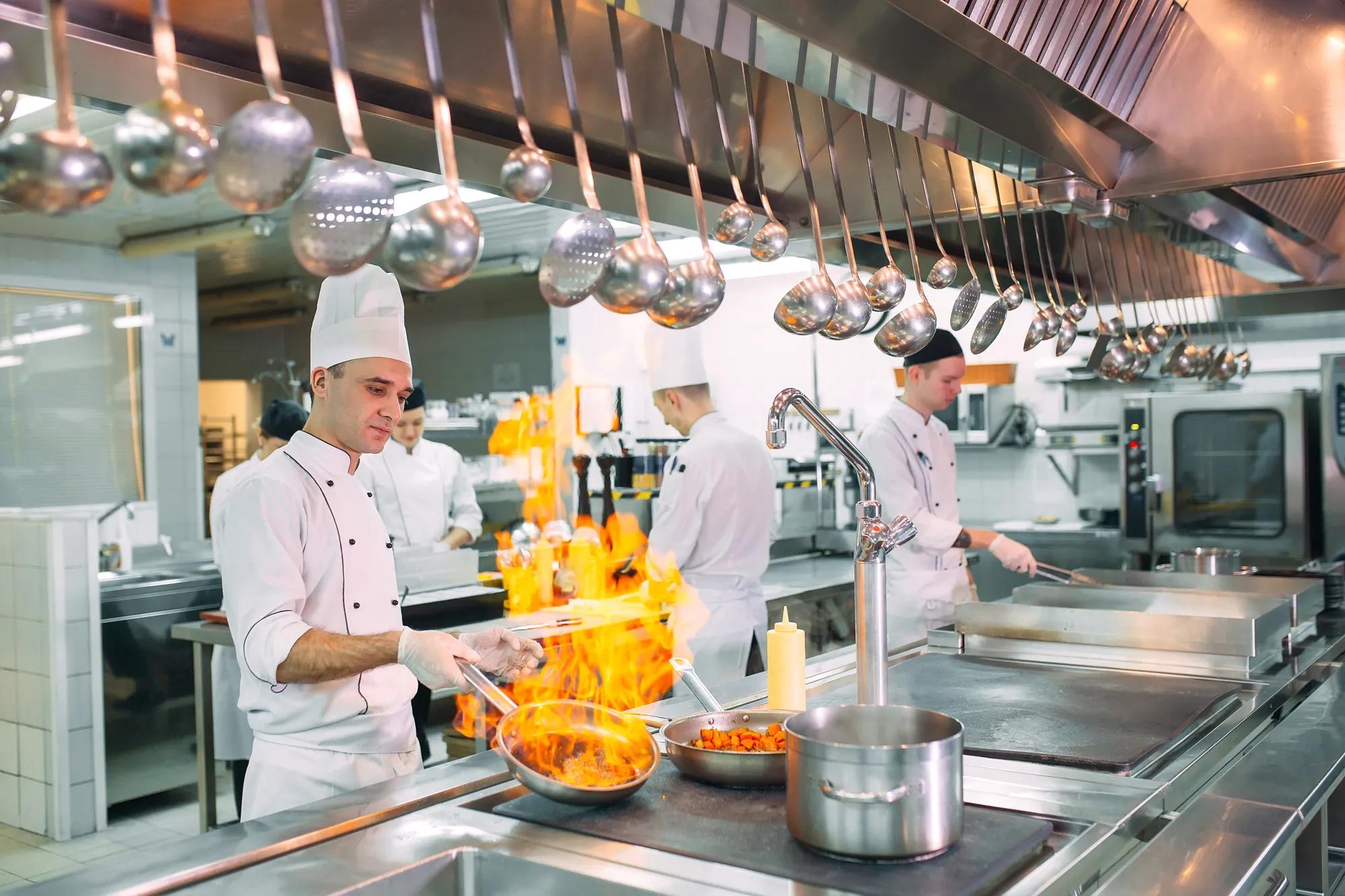
A commercial kitchen runs flames, oil, and heat-generating equipment for most of the day. Add a fryer line, a flat-top, a few ranges, and a hood pulling grease-laden air through ductwork, and a small flare-up can turn into a fire that closes a location for weeks. Fire suppression exists to stop that escalation before it starts, and for restaurant owners and operators, getting the system right is a legal requirement as much as a safety one.
For a single-unit owner, fire suppression might mean one conversation with one local inspector. For a corporate-owned chain or a multi-brand franchisee opening locations across a dozen states, it means coordinating system design, code review, and inspection timelines across jurisdictions that don’t always agree on the details. Understanding how these systems work, and what it takes to keep them compliant, makes that coordination easier.
What Is a Restaurant Fire Suppression System?
A restaurant fire suppression system is an automatic fire protection system built specifically for commercial cooking environments. It detects heat at or near cooking surfaces, discharges a suppression agent to control or extinguish the fire, and cuts the fuel supply to the affected appliance, all without requiring manual intervention. Unlike standard sprinkler systems, which release water across a broad area, kitchen suppression systems use a wet chemical agent formulated to handle grease and oil fires safely.
Any restaurant operating a commercial kitchen with open flames, fryers, griddles, or other high-heat cooking equipment is required to have one. That covers quick-service and fast-food locations, full-service and casual dining restaurants, hotel food and beverage operations, cafeterias, and ghost kitchens. The specific system required depends on the equipment, the kitchen layout, and the local authority having jurisdiction over the installation. A compliant restaurant fire suppression system isn’t a product you order off a shelf. It’s a system designed around the kitchen it protects.
Fire Suppression Systems Aren’t One-Size-Fits-All
A fire protection engineer designs a suppression system around the specific equipment it protects: the type and number of fryers, the grill surface area, the duct configuration above the cook line, the distance between appliances. A quick-service kitchen with a compact fryer bank looks nothing like a full-service kitchen running a wood-fired oven and an open grill station. The suppression coverage for each differs in the same way.
Brands that operate multiple concepts feel this directly. A franchisee running three different restaurant brands under one ownership group can end up managing three different kitchen layouts, three different equipment lists, and three different suppression specifications, even when the buildings sit a mile apart.
What a Fire Suppression System Actually Does
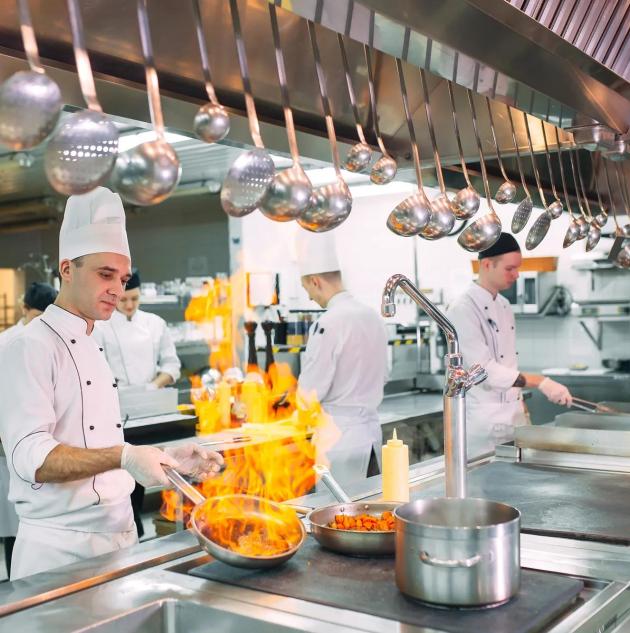
Most commercial kitchen suppression systems use a wet chemical agent, not water. Water reacts with burning oil by scattering it, spreading the fire instead of extinguishing it. A suppression system detects heat at the cooking surface, discharges an agent designed to cool the fire and form a barrier that blocks reignition, and in most designs also shuts off the gas or electrical supply to the affected appliance at the same time.
That shutoff matters as much as the discharge itself. A fire suppressed by the chemical agent but still fed by an open fuel source can reignite within minutes. A system designed and maintained to spec addresses both halves of the problem.
Common System Types and Where They Apply
Hood and duct suppression systems cover the cooking line: fryers, griddles, ranges, and the ventilation hood and ductwork above them. These systems form the backbone of fire protection in most commercial kitchens, but the specifics vary by equipment:
- Deep fryers need agent coverage calibrated to the oil volume and surface area.
- Solid-fuel equipment, like wood-fired ovens or charbroilers, often needs a different suppression approach than standard gas equipment.
- Specialty cooking lines, including those used for catering or ghost kitchen operations, may need custom nozzle placement based on a layout that doesn’t match a standard kitchen template.

How Local Code Requirements Shape Your System
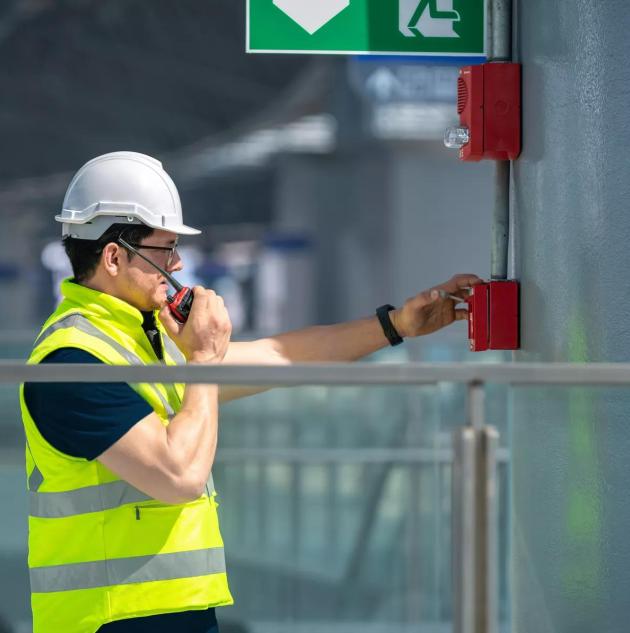
The local authority having jurisdiction reviews and inspects every fire suppression installation, and that review process varies by city, county, and state. Two locations in the same restaurant chain, opened the same year, can face different documentation requirements, different inspection scheduling, and different interpretations of how a system should be installed.
For a single restaurant, that variation is a minor inconvenience. For a chain opening a dozen locations a year, it’s one of the most common reasons a grand opening date slips. A project team that skips local code review during planning risks a flag at final inspection, with the delay landing on operations days before the doors open. A fire protection partner with experience across multiple jurisdictions catches those gaps before they become delays.
Maintenance, Inspections, and Monitoring Aren’t Optional
A suppression system that passed inspection at installation doesn’t stay compliant on its own. Most jurisdictions require kitchen suppression systems to be inspected at least twice a year, with the agent cylinders, detection components, and nozzle placement all checked against the original design. Equipment changes, kitchen remodels, and even a new piece of cooking equipment can affect whether the existing system still provides adequate coverage.
Continuous fire monitoring closes the gap between scheduled inspections. A system tied to remote monitoring flags a fault, a low-pressure reading, or a triggered discharge the moment it happens, instead of waiting for the next routine visit to catch a problem. For a multi-location chain, that real-time visibility across every site replaces the guesswork of relying on local staff to report issues.
Why Integrated Fire Detection and Monitoring Strengthen Protection
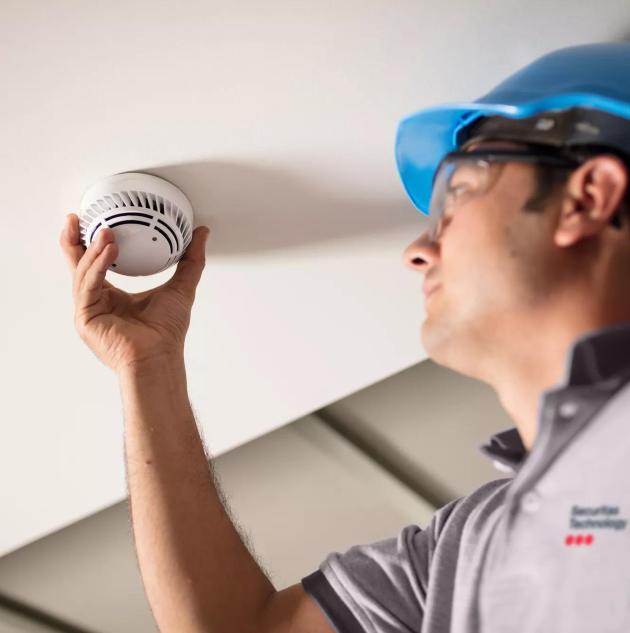
Suppression stops the fire at the source, but a kitchen fire that starts after closing still needs someone to respond. Fire detection and alarm systems extend protection beyond the cook line, watching for smoke and heat throughout the building, while remote fire monitoring connects that detection to a team that can verify the alert and dispatch the fire department, day or night.
For a restaurant that closes at 10 p.m. and reopens at 6 a.m., those eight hours are exactly when a fire is least likely to be caught early. Monitoring removes the dependency on someone happening to notice smoke from the parking lot.
Why Restaurant Chains Partner with a Single Fire and Security Provider
Many restaurant operations teams manage separate vendors for fire suppression, fire alarm, intrusion, and video, each with its own service contract, its own inspection schedule, and its own point of contact. That fragmentation creates blind spots. One vendor schedules a suppression inspection without checking whether the fire alarm inspection happened the same year, and when a deadline slips, vendors pass accountability back and forth instead of resolving it.
One national restaurant brand consolidated fire and intrusion systems across roughly 500 locations under a single provider managing the rollout from start to finish, rather than coordinating dozens of regional vendors location by location. That consolidation gave the operations team one point of contact, one set of documentation, and one team accountable for keeping every location compliant. Their restaurant security program became something they could manage at scale instead of site by site.
Key Takeaways on Restaurant Fire Suppression Systems

Your Kitchen Has a Legal Fire Protection Requirement
Restaurant fire suppression systems are legally required for any commercial kitchen with open flames or high-heat cooking equipment, and the system must be designed for the specific equipment it covers.
Water Makes Grease Fires Worse, Not Better
Wet chemical suppression systems are the standard for commercial kitchens. They handle grease and oil fires in ways water-based sprinklers cannot.
Two Locations, Same Chain, Different Code Requirements
Local code requirements vary by jurisdiction. A system that clears inspection in one city may not meet the requirements in another county.
A Passed Inspection Today Doesn't Mean Compliant Tomorrow
Compliance is ongoing, not a one-time install. Most jurisdictions require semi-annual inspections, and kitchen changes can affect whether existing coverage remains adequate.
Fires Don't Wait for Business Hours to Start
Integrating fire suppression with fire detection and remote monitoring closes the gap between inspections and ensures someone responds even when the kitchen is closed.
Your Kitchen Has a Legal Fire Protection Requirement
Restaurant fire suppression systems are legally required for any commercial kitchen with open flames or high-heat cooking equipment, and the system must be designed for the specific equipment it covers.
Water Makes Grease Fires Worse, Not Better
Wet chemical suppression systems are the standard for commercial kitchens. They handle grease and oil fires in ways water-based sprinklers cannot.
Two Locations, Same Chain, Different Code Requirements
Local code requirements vary by jurisdiction. A system that clears inspection in one city may not meet the requirements in another county.
A Passed Inspection Today Doesn't Mean Compliant Tomorrow
Compliance is ongoing, not a one-time install. Most jurisdictions require semi-annual inspections, and kitchen changes can affect whether existing coverage remains adequate.
Restaurant Fire Suppression Systems FAQs
Yes. Any commercial kitchen operating open flames, fryers, or high-heat cooking equipment is required to have a fire suppression system under local fire and building codes. The requirement applies to quick-service restaurants, full-service restaurants, cafeterias, food halls, and hotel kitchens. The specific system required, and who approves it, depends on the local authority having jurisdiction over the installation. Operating without one puts the business at risk of failed inspection, forced closure, and insurance liability.
Most jurisdictions require commercial kitchen fire suppression systems to be inspected at least twice a year, typically every six months. The inspection covers agent cylinders, nozzle placement, detection components, and the fuel shutoff mechanism, all checked against the original system design. Equipment changes or kitchen remodels between inspections can affect compliance, so operators should notify their service provider any time the cooking line changes. Remote monitoring between inspections adds a layer of protection by flagging faults or low-pressure readings in real time.
Commercial kitchens use wet chemical suppression systems, which discharge a liquid agent specifically formulated to handle grease and cooking oil fires. The agent cools the burning surface and creates a soapy foam layer that prevents reignition. Hood and duct systems are the most common configuration, covering the cook line, the exhaust hood above it, and the ductwork that carries grease-laden air out of the kitchen. The exact system varies based on cooking equipment type, kitchen layout, and local code requirements. A fire protection engineer sizes and positions nozzles based on the specific equipment list, not a generic template. Learn more about fire detection and suppression systems for commercial environments.
A fire sprinkler system releases water across a broad area when it detects heat, which works well for general building fires but causes problems in commercial kitchens. Water hitting burning oil scatters the grease and spreads the fire rather than containing it. A kitchen fire suppression system uses a wet chemical agent targeted at the cooking surface, shuts off the fuel supply simultaneously, and is designed to prevent reignition. Restaurants typically need both: a suppression system covering the cook line and ductwork, and a fire alarm system covering the rest of the building.
Get in touch with Experts in Fire Protection Solutions for Restaurants
Securitas Technology designs fire suppression systems around each kitchen’s actual equipment and local code requirements, then manages the inspections, monitoring, and maintenance that keep a restaurant compliant year after year. Protect your restaurant with a fire suppression solution designed for your kitchen, local code requirements, and long-term compliance. Contact our fire protection experts to learn how we can help safeguard your locations.