
Top Access Control Trends 2026: 7 Trends Reshaping Workplace Security
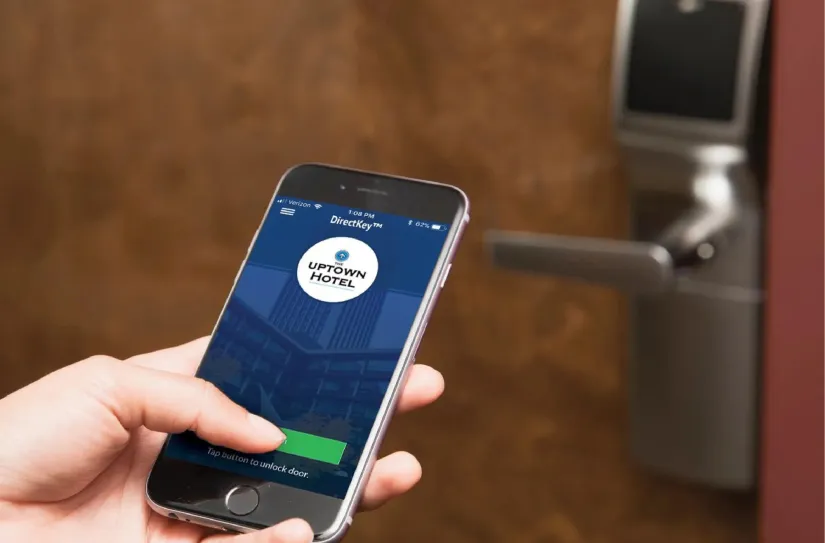
Access control is one of the most mature and widely deployed electronic security technologies — and in 2026, it's also one of the fastest-evolving. The top access control trends this year point to a structural shift in how your organization manages who enters which spaces, when, and how.
Once defined by plastic badges and standalone panels, access control is now shifting toward mobile‑first credentials, cloud‑based architectures, identity‑centric design, and AI‑assisted systems. According to Securitas Technology's 2026 Global Technology Outlook Report — drawn from a survey of 4,540 client organizations across 17 countries — 29% already use mobile smartphone credentials, with another 27% planning adoption in the next 12–18 months.¹ Access control remains foundational, but how it's delivered and managed is changing fast.
This article explores seven access control trends shaping workplace security in 2026 and what they mean for organizations planning their next phase of security.
Key Takeaways
- Mobile credentials are going mainstream. 29% of organizations already use smartphone-based access, and another 27% plan to adopt within 12–18 months.
- Cloud is becoming the default. Among cloud adopters, 64% already run cloud access control. Fully cloud-based deployments are projected to grow from 18% today to 34% in five years.
- Identity is moving to the center. HR-, IT- and identity-platform integrations are turning access control into a core part of identity and access management.
- AI and biometrics smooth out the user experience. Biometric single sign-on (SSO) replaces shared passwords, and AI flags unusual access patterns by time, location and behavior.
- Resilience and zero-trust are design defaults. Zero‑trust access control means no device or user is trusted automatically, even inside the network. Authentication, redundancy, and failover are built in from the start.
- Sustainability is shaping device choice. Power over Ethernet (PoE) and Wi-Fi-enabled locks reduce cabling, energy use and cost without compromising security.
- Access data is becoming business intelligence. Occupancy patterns, cleaning schedules, and ROI cases all start with access logs.
Bottom line: Plan for a mobile-first, cloud-enabled, identity-centric architecture — and treat your access data as a strategic asset, not just a security record.
Access control is mature — but how it's delivered is changing fast
Access control is among the most adopted security technologies across industries, alongside video, intrusion detection, and fire systems.1
What’s changing now is how organizations deploy, manage, and scale it:
- 29% of organizations already use mobile smartphone credentials, with another 27% planning adoption in the next 12–18 months.1
- 28% use cloud‑based solutions and storage, with 20% planning adoption.1
- 43% already use managed and hosted access control, with 15% planning to adopt it.1
Together, these signals point to a structural shift: from card‑centric, on‑premises systems to mobile, cloud‑enabled, service‑oriented access control, designed to be easier to manage, more resilient, and better aligned with modern workplaces.
Trend 1: The rise of mobile credentials - Your phone is your badge
Mobile credentials are moving from early adoption to the mainstream — and they're changing what security teams can see, not just how users get through doors. With credentials in a mobile wallet, you can monitor access attempts in real time, apply geofencing rules, and pull usage analytics that simply aren't possible with plastic cards.
Nearly three in ten organizations already use smartphone-based access credentials, and adoption continues to accelerate. This reflects a broader move toward digital‑first access management, where convenience, security, and flexibility come together.
Why organizations are adopting mobile access control
Mobile credentials support the way people already work today:
- A simpler user experience: Employees and visitors use smartphones they already carry
- Less physical badge management: Fewer cards to issue, replace, or recover
- Faster changes: Access can be issued or revoked remotely as roles change
Security and risk benefits
From a risk perspective, mobile credentials reduce exposure to lost or stolen cards and support real‑time visibility into access activity. Security teams gain clearer insight into who is accessing which spaces and when, helping them respond more proactively to unusual behavior without adding friction for users.
Mobile credentials vs. physical cards
If you're weighing how quickly to move, here's how the two options compare across the criteria most security and IT teams use when evaluating an access control refresh:
Criteria | Mobile credentials | Physical cards |
| User experience | Use a smartphone employees already carry — no extra badge to issue, store or remember. | Familiar and universally understood, but employees must carry, replace or recover a separate badge. |
| Security | Multi-factor by default through the phone's PIN and biometric features; harder to clone or share. | Typically single-factor; exposed to loss, theft and card cloning. |
| Lifecycle management | Issued or revoked remotely in seconds as roles, sites or employment status change. | Manual issuance and collection; de-provisioning depends on physical card return. |
| Deployment cost | Lower lifetime cost — no printing, plastic stock, ribbons or postage. | Lower upfront hardware cost; recurring spend on cards, printers and replacements. |
| Visibility & analytics | Real-time monitoring, geofencing and usage analytics that plastic cards can't support. | Door-level event logs only; no native analytics or geofencing. |
| Best fit | Multi-site, hybrid or high-turnover workplaces; organizations modernizing identity and IT. | Sites where smartphones aren't permitted, or where existing card infrastructure still has years of useful life. |
For most organizations, the answer isn't “one or the other” — it's deciding which sites or user groups to move first, and how long the two systems run side by side.
Trend 2: Cloud and managed access control become the standard
Cloud adoption across electronic security continues to accelerate, and access control is no exception. Today, 18% of organizations are fully cloud-based; in five years, 34% expect to be — almost a doubling in cloud-first security architectures.
Among organizations using cloud-based systems, cloud access control is one of the most widely deployed applications, used by 64% of cloud adopters2. At the same time, organizations are increasingly relying on managed and hosted access control services to support day-to-day operations.
What’s driving the shift
The move toward cloud and managed services reflects practical operational needs:
- Centralized management across multiple sites
- Easier updates and scalability without major infrastructure changes
- A foundation for remote services and integrations, including centralized access and system management through security management platforms such as SecureStat® HQ™.
"Cloud solutions offer peace of mind to users. Maintenance of servers and software upgrades are no longer day-to-day tasks for the end user, freeing them to focus on their core business activities while their security infrastructure remains up to date."
Dr. Serdar Ince
For many organizations, managed access control also helps address internal resource constraints, allowing providers to handle system health, updates, and maintenance while internal teams focus on higher-value priorities.
Trend 3: Digital‑first access management - Identity at the center
Access control is increasingly designed around identity, not just entry points.
Digital‑first, identity‑centric access management connects physical access with HR and IT systems, helping organizations manage permissions more consistently across the employee lifecycle.
Digital‑first access management:
- Uses mobile credentials, automation, and analytics
- Enables remote permission management and real‑time monitoring
- Links physical access to identity platforms across HR and IT
Why identity‑centric access matters
By tying access rights to identity and role:
- New hires and departures automatically trigger access changes
- Role‑based policies are enforced consistently
- Organizations reduce orphaned credentials and improve auditability
The result is stronger control, fewer manual errors, and clearer visibility into who has access to critical areas and why.
Trend 4: AI and biometrics make access both safer and smoother
AI is already widely used across electronic security for applications such as object recognition, intrusion detection, and anomaly detection. In 2026, these capabilities are increasingly supporting identity and access workflows.
Modern platforms now enable:
- Biometric authentication, such as fingerprint or facial recognition
- Single sign‑on (SSO) across physical and digital systems
- Unified identity platforms that reduce login friction while strengthening security
In healthcare, biometric single sign-on (SSO) — where a fingerprint or face scan replaces a typed password across both physical doors and clinical systems — lets clinicians move quickly between secure areas and patient records, supporting productivity while reducing reliance on shared passwords. AI further enhances access control by helping identify unusual access patterns based on time, location, or behavior.
Trend 5: Resilient, zero‑trust access architectures
Access control design is increasingly incorporating resilience and cyber hardening by default, rather than as an afterthought.
The report highlights several best‑practice design principles:
- Controllers that keep making access decisions and buffering events even if the network drops
- Primary and backup network ports routed over different physical paths, so the backup keeps alarms flowing if the primary fails
- On-prem head ends running High Availability (HA) — two servers or VMs, ideally in separate locations — with a Disaster Recovery (DR) “warm” server as an extra failover
- Cloud systems built on multiple availability zones, with database restoration points captured every hour
"For any organization, protecting confidential data has become equally as important as protecting people, property, and assets. Security technology now sits at the intersection of physical and cyber risk, and organizations must manage both simultaneously."
Mike Beattie
In data centers, where access decisions are critical, and a single misrouted permission can take a service offline, this thinking is already mainstream. Securitas is training more than 10,000 officers specifically for data center security operations, according to the 2026 Global Technology Outlook Report — a signal of how much weight identity, role-based access, and segmentation now carry in environments where uptime is everything.
Zero-trust networking — the principle of trusting no device or user by default, even inside your own network — plays a growing role here. Doors, controllers, and edge devices are treated as untrusted endpoints, and strong authentication is enforced everywhere, not just at the perimeter.
Trend 6: Sustainable access control - PoE, Wi‑Fi locks, and greener doors
Sustainability is increasingly shaping access control decisions, especially in door-dense environments. Nearly half of security professionals — 48% — now say sustainability is important or very important when selecting security technology.²
Organizations are looking beyond HVAC and lighting to consider the energy footprint of access devices. Key developments include:
- Power over Ethernet (PoE) and Wi‑Fi‑enabled locks
- Greater use of existing IT networks to reduce cabling and labor
- Support for ESG and green building initiatives without compromising security
This approach helps organizations modernize access control while aligning with broader sustainability goals.
Trend 7: Access data as business intelligence, not just logs
"Security technology is now a driver of business value, in addition to delivering on its core mission of safeguarding people and property.
Doug Walsh
Access control data is increasingly being used to deliver measurable business value, not just security records.
When combined with cloud analytics and AI, access and video data can help organizations:
- Automate alerts for unusual behavior
- Improve response decisions using attributable data
- Understand space utilization, traffic patterns, and operational needs
Over time, that data shapes practical decisions — where to place signage, how to plan routes through busy floors, when to schedule cleaning and maintenance for high-traffic areas, and how to right-size space across a portfolio. It reframes access control as a strategic data source, not just a security system.
Preparing for the next generation of access control
Access control in 2026 is about enabling secure, resilient and intelligent workplaces. From mobile credentials and cloud‑based architectures to identity‑centric design, AI‑assisted insights, and sustainable infrastructure, access control is becoming a strategic platform that supports both security and business outcomes.
Where to start: your 4-step access control plan for 2026
If you're shaping your access control roadmap for the next 12 months, four moves stand out:
How much of your access control still runs on plastic cards and on-prem panels? Mapping where you are today — by site, by user group, by system age — is the foundation for every decision that follows.
You don't need to act on all seven at once. For most organizations, mobile credentials and managed or hosted access control are the most accessible starting points, and they tend to unlock the cloud, identity and analytics moves that come after.
Choose a single site, region, or business unit where your team is most stretched — that's where you'll see the clearest, fastest return, and where you'll learn the most before scaling.
Pick three or four measurable outcomes — fewer orphaned credentials, faster on- and offboarding, lower badge-management cost, better uptime — and track them. Concrete metrics turn modernization from a project into a business case.
To explore these trends in greater depth, including data, regional insights, and expert perspectives, read the full 2026 Global Technology Outlook Report and see how electronic security is evolving across industries worldwide.
Frequently asked questions on access control trends
What are the top access control trends in 2026?
The top access control trends in 2026 are: mobile credentials, cloud and managed access control, digital-first identity-centric management, AI and biometrics, resilient zero-trust architectures, sustainable PoE and Wi-Fi-based devices, and treating access data as business intelligence. Together they mark a structural shift from card- and panel-based systems to mobile, cloud-enabled, identity-driven access control, according to Securitas Technology's 2026 Global Technology Outlook Report.
How do access control trends connect to identity and access management?
Modern access control trends are closely linked to identity and access management (IAM). Identity-centric access ties physical entry to HR and IT systems so that joiners, movers and leavers automatically trigger the right permissions. Mobile credentials, biometric SSO and unified identity platforms blur the line between physical and digital access — making access control a core component of your organization's broader IAM strategy, not a parallel system.
What's the difference between traditional access control and digital-first access management?
Traditional access control relied on physical cards, on-premises panels and standalone credential databases. Digital-first access management uses mobile credentials, automation and analytics, links physical access to identity platforms across HR and IT, and lets security teams remotely manage permissions and monitor access attempts in real time. The shift moves access control from a static "lock and key" system to a dynamic, identity-aware service that scales with your organization. You can read more in our access control overview.
Are mobile credentials more secure than physical cards?
For most organizations, mobile credentials are at least as secure as plastic cards — and often more so. They reduce exposure to lost or stolen badges, support faster issuance and revocation as roles change, and pair naturally with the phone's built-in PIN, biometric and geofencing features. They also give security teams real-time visibility into access activity that traditional cards simply can't provide.
What does zero-trust mean in access control?
Zero-trust access control treats every door, controller and device as untrusted by default — even inside your own network. Strong authentication is enforced everywhere, not just at the perimeter, and network paths are designed for resilience with redundant routing, high-availability (HA) pairs and disaster-recovery (DR) failovers. The goal is to keep access decisions reliable and verifiable even if part of the network or a single component fails.
How can access control data drive ROI beyond security?
Beyond security, access control data is increasingly used as business intelligence. When combined with cloud analytics and AI, it can automate alerts for unusual behavior, attribute incidents for faster response, and inform decisions on signage, route planning, cleaning schedules in high-traffic areas, and overall space utilization. Many organizations now use access data alongside video to support real estate, operations, and ESG reporting.
Sources:
- In-house branded survey of 4540 Securitas Technology clients in Australia, Belgium, Canada, Denmark, Finland, France, Germany, Ireland, Mexico, Netherlands, Norway, Spain, Sweden, Switzerland, Turkey, the United Kingdom, and the United States. Conducted November 2024.
- Third-party blind survey of 575 security and loss prevention professionals with decision-making authority for security technology in Australia, France, Germany, Sweden, the United Kingdom, and the United States. Conducted February & March 2025.