
6 Ways AI Is Changing Access Control in 2026
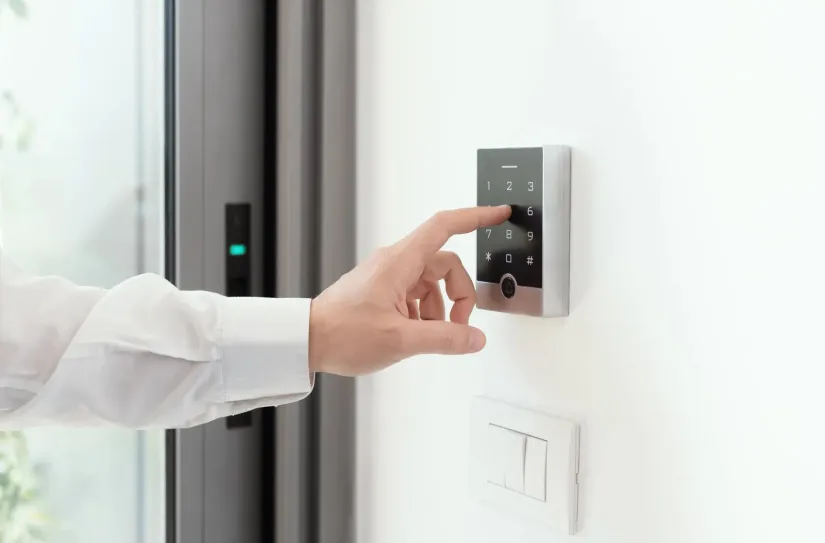
Access control is undergoing its most significant transformation in decades. What used to be a static, card-and-PIN-based system is rapidly evolving into an intelligent, identity-centric ecosystem powered by artificial intelligence (AI).
In 2026, AI is fundamentally reshaping how organizations govern who enters their facilities, when, and under what conditions, and turning access data into strategic business insight.
Drawing from the 2026 Global Technology Outlook Report, here are six ways AI is redefining access control this year.
1. AI Moves Access Control into the Identity & Decision-Making Layer
AI is no longer an add-on to access control . It’s becoming the brain of the system, especially as AI identity management becomes central to how organizations make access decisions. According to our market survey, 70% of organizations already use AI in their security programs1.
AI and AI agents are now embedded in access control, AI identity management, and security management platforms, enabling enhanced efficiency and data-driven decision-making.
How AI elevates access decisions
- AI analyzes contextual signals (time of day, failed attempt patterns, unusual locations).
- It correlates data from multiple systems (access, video, sensors) to spot anomalies.
- It identifies patterns such as repeated access failures at unusual times or deviations from normal behavior.
This moves access control from a simple “yes/no” check to an adaptive, intelligence-driven decision engine.
In a manufacturing facility, for example, AI identity management can identify repeated access attempts to controlled areas outside of scheduled shifts, helping security teams spot potential credential misuse or policy violations early.
2. AI Makes Biometric Access More Accurate, Trusted, and Widely Used
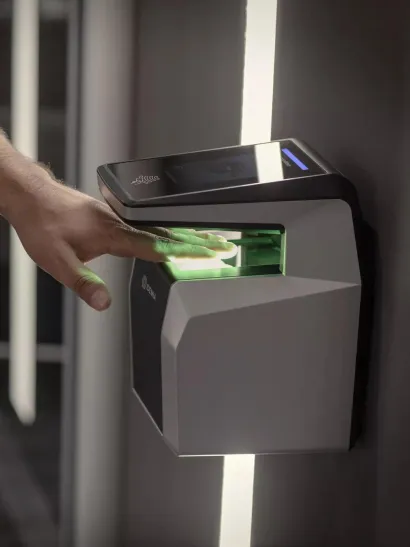
Biometric authentication has been around for years, but AI - especially AI identity management systems - is the reason it is now future-ready. AI improves the accuracy and reliability of authentication by continually learning changes in people’s appearance.
Biometric-based access control is one of the top AI-enabled use cases. It’s adopted by more than 45% of organizations using AI for building security2.
Why AI-enhanced biometrics are accelerating
- Continuous learning reduces false rejects and false accepts.
- Biometrics can now support frictionless authentication across both physical and digital systems.
- Busy environments like healthcare benefit from faster and touchless identity verification.
AI‑enhanced biometric platforms can also support single sign‑on across physical spaces, applications, and systems, improving user experience while reducing reliance on shared or weak passwords and supporting compliance requirements.
In a hospital during shift change, for example, AI-enhanced biometrics could recognize staff quickly and accurately, even when they’re wearing masks, glasses, or protective equipment, reducing queues and improving both security and patient flow.
3. AI Powers Digital-First, Proactive Access Management
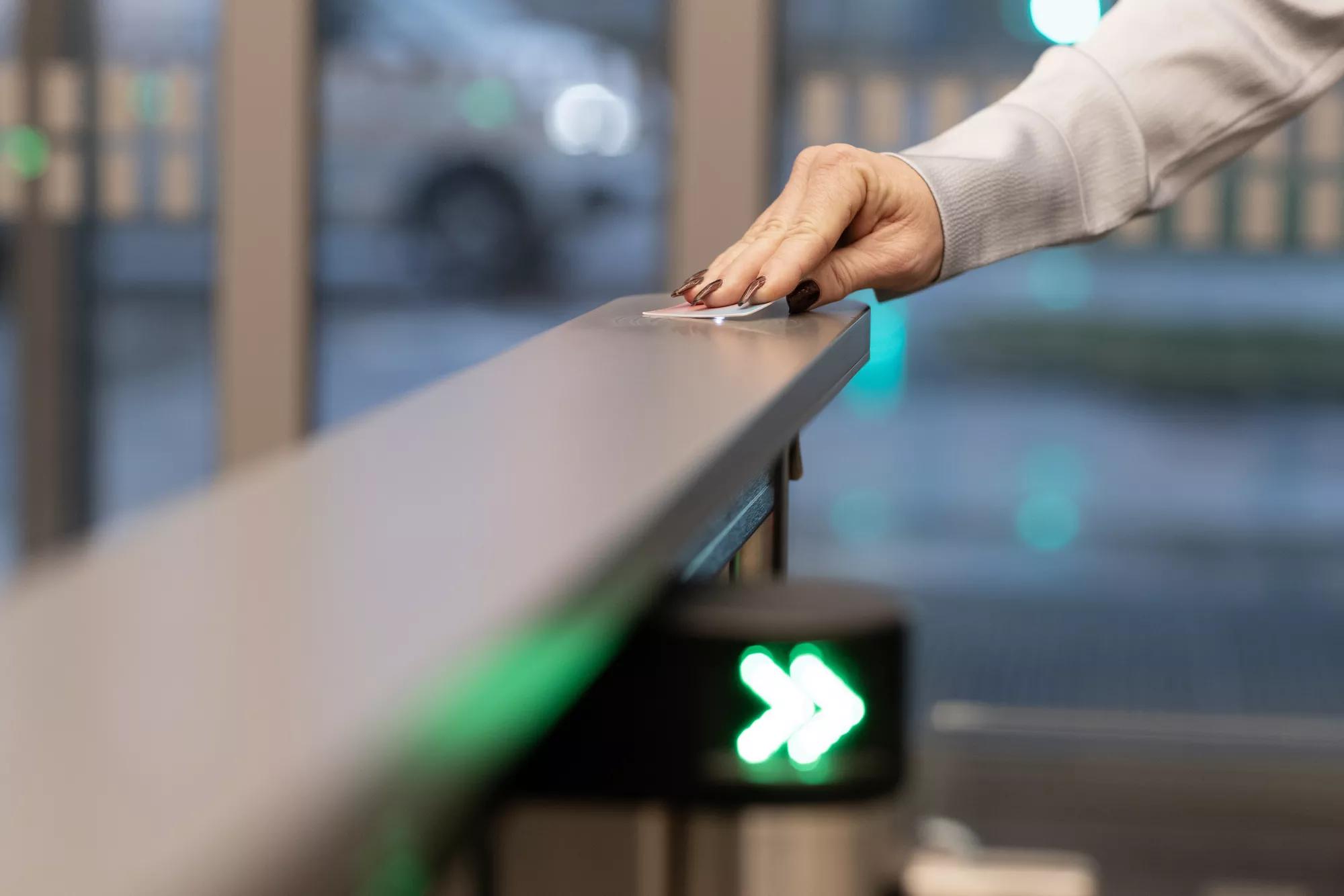
Modern access strategies increasingly rely on mobile credentials, digital workflows, AI identity management, and remote management. Digital-first access management uses mobile credentials, intelligent automation, and analytics to create a seamless and secure experience.
With mobile credentials, employees and visitors can use their smartphones to enter facilities, while security teams can update permissions remotely and monitor access activity in real time. This creates a truly digital‑first access experience, faster for users, and far more efficient for the teams managing it.
AI’s role makes these systems proactive rather than reactive.
What AI does in digital-first access management
- Detects anomalies using deep learning rather than static rules.
- Monitors access attempts across people, time, and location, identifying unusual activity.
- Highlights exceptions like repeated denied entries late at night or badge use in impossible locations.
Anomaly detection now leverages models that understand “normal” behavior and flag deviations, such as unusual employee activity or anomalies tied to specific times and days.
In a commercial facility, for example, AI can recognize that access attempts are occurring on days or times when activity is typically low, such as weekends or holidays, and surface those exceptions for review.
4. AI Turns Access Logs into Workplace & Space Insights
Access events have historically been treated as security artifacts, but AI turns them into a strategic data asset.
Security systems continually capture building usage data (e.g., doors opening, alarms being disarmed). When combined with AI, organizations can unlock insights about:
- Space utilization
- Employee movement patterns
- Meeting room, energy, and HVAC optimization
- Office layout performance
When access control data is paired with video surveillance insights, AI can map real patterns of how people move through buildings, identifying peak‑use areas, bottlenecks, and underutilized spaces. This helps organizations optimize everything from meeting‑room booking and layout design to lighting, heating, comfort, and overall energy performance. With AI doing the analysis, these insights become decision‑ready and easy for workplace and facilities teams to act on.
In a hybrid workplace, for example, AI can spot that a particular floor consistently reaches peak occupancy on Tuesdays and Thursdays, prompting facilities teams to adjust meeting‑room availability and HVAC schedules accordingly.
Access control becomes a workplace analytics engine
- See when spaces are busiest (and why)
- Adjust cleaning, staffing, or HVAC schedules
- Improve employee experience with evidence-based space planning
5. AI Maintains Access Infrastructure Behind the Scenes
AI’s impact on access control isn’t limited to authentication; it strengthens the infrastructure itself.
Services such as Preventive System Health Monitoring use AI tools and human expertise to detect issues like degrading batteries, offline controllers, and camera interference before they cause downtime.
AI also helps monitor:
- Network latency
- Hard drive capacity
- Error conditions
- Device health
- Firmware status
This supports stronger business continuity and reduces operational disruptions.
AI‑driven preventative system health monitoring combines intelligent analytics with expert human oversight. Working together, they can detect degrading batteries, offline controllers, or camera interference early, long before these issues cause downtime. When integrated systems such as cameras, access control, alarms, and intercoms share this intelligence, AI helps verify events across multiple inputs and reduces the delay between detection and response, enabling faster, more coordinated action.
AI enables uninterrupted security
- Flags problems before they become outages
- Ensures alarms and events are flowing reliably
- Supports remote management during crises
- Improves resilience without adding labor
6. AI Enables Risk-Based Access and Behavior Analytics
AI is increasingly used to understand behavioral context and risk, not just access attempts, strengthening AI identity management by evaluating how, when, and where identities interact with the environment. Security and occupant safety are among the leading use cases for AI in buildings today.
AI use case adoption by organizations for building security:2
use AI to detect unusual behavior
use AI for location-based analysis
use AI-enabled biometric authentication
Additionally, AI is now capable of identifying patterns that may signal risk, helping teams respond proactively rather than reactively.
How risk-based access works
- AI “scores” events based on time, user history, behavior, and location
- High-risk events can trigger step-up authentication
- Low-risk, routine events flow seamlessly
In a visitor‑management workflow, AI can recognize when a contractor attempts access during an unapproved window or at an unusual location, prompting a step‑up verification check before allowing entry.
This shifts access control into a dynamic, risk-aware decision engine.
Looking Ahead: AI Is Redefining the Security Perimeter
AI is changing access control at every layer: identity, authentication, operations, analytics, system health, and AI identity management. As access systems become more intelligent, they also become more valuable, driving benefits across security, operations, and workplace experience.
Organizations that embrace AI-driven access management will gain a more secure, frictionless, and insight-rich environment built for the realities of 2026 and beyond.
Read the full report
To explore the full set of data, trends, and insights shaping security in 2026 and beyond, read the complete 2026 Global Technology Outlook Report.
Access Control
Create a safe environment for your employees and visitors with commercial access control systems.

Workplace Management Solutions
Integrate workplace management into your existing security for a safer, healthier and more flexible environment.

Visitor Management
Create and automate a professional, safe, and inviting visitor experience.
Sources:
- Third-party blind survey of 575 security professionals with decision-making authority for security technology in Australia, France, Germany, Sweden, the United Kingdom, and the United States. Conducted February & March 2025, from the 2026 Global Technology Outlook Report published by Securitas Technology.
- 2026 Global Technology Outlook Report published by Securitas Technology.