Data Center Safety in the AI Era: Managing Risk as AI, Power Density and Infrastructure Scale

Most data center safety guidance still reads like it was written for a single server room: a fire extinguisher checklist, a wiring inspection schedule, a reminder to keep the aisles clear. That guidance hasn't kept pace with how data centers actually operate today.
AI workloads and cloud demand are pushing facilities to scale faster and denser than most existing checklists anticipated: more racks per row, more heat generated per rack, more automated systems running unattended around the clock. A safety program built around a smaller, slower-growing facility won't hold up under those conditions.
This article covers what data center safety means today, how growing data volumes are reshaping capacity planning, the physical hazards every program must address, where security operations fit into a modern safety strategy, and the standards that govern all of it. It closes with a practical checklist you can put to work right away.
What Data Center Safety Means in an AI-Driven Growth Era
Modern data center risk management brings together three closely connected disciplines: worker health and safety, physical security, and operational resilience. Each has different requirements and owners, but increasing power density, automation and infrastructure complexity mean decisions in one area increasingly affect the others.
- Occupational health & safety — protecting workers from electrical, fire, thermal, noise, ergonomic and other hazards.
- Physical security — protecting people/assets against unauthorized access, theft, sabotage and intentional acts.
- Operational resilience — maintaining power, cooling, availability and recovery from disruptions.
Our data center security expertise draws on all three aspects, treating occupational health, physical security, and operational resilience as one connected strategy rather than three separate line items.
Term | Definition |
| Data center health and safety | The umbrella term covering both worker safety (electrical, fire, heat, noise, ergonomic hazards) and facility/asset protection (power, cooling, and equipment uptime). |
| Hot aisle / cold aisle containment | A rack layout practice that physically separates hot exhaust air from cool intake air to manage equipment temperature. |
| Critical infrastructure | Assets, systems and networks considered essential to national security, economic security, public health or safety. Applicable regulatory and resilience requirements vary by jurisdiction, sector and the specific function of the facility. |
What has changed is the pace and density behind both responsibilities. AI and cloud adoption are pushing organizations to build capacity faster than before, and to pack more computing into the same physical footprint. That growth touches nearly every part of a safety program: more electrical load to manage, more heat to dissipate, more contractors and technicians moving through the facility, and more automated systems to monitor around the clock. A safety program built around a facility's original design specifications will fall behind the moment that facility scales past them.
That's the tension the rest of this piece works through: not that data center safety has become more dangerous, but that it has become more complex, and complexity needs a plan.
How Growing Data Volumes Are Reshaping Data Center Capacity Planning
Capacity planning is usually treated as an infrastructure or IT conversation: how much power, cooling, and floor space a facility will need next year. It belongs in the safety conversation too. Every decision that adds density, faster buildouts, denser racks, or more automated systems, changes the facility's hazard profile at the same time it changes the infrastructure plan.
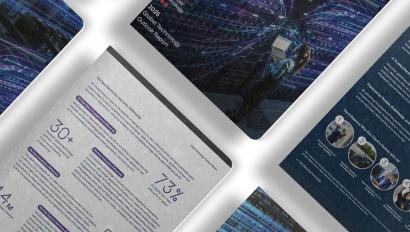
“The future of security is shifting toward real-time, proactive management, driven by AI, data integration, and other network technologies. Security is no longer reactive — it is an intelligent, connected system,”1 says Mike Beattie, Global CIO & SVP Information Technology at Securitas Technology, in our Global Technology Outlook Report 2026. As data centers scale, the security architecture must scale with them. Additional buildings, racks, entrances, contractors, and critical infrastructure create more devices, identities, alarms, and events for security teams to manage, even if the security systems themselves represent only a small portion of total facility power demand.
The scale of that shift is already measurable. More than 70% of organizations surveyed have adopted or are actively in the process of adopting AI-powered security technologies.2 For a growing data center, that means capacity planning now must account for the security and monitoring layer alongside power and cooling, not after it.
Uptime Institute's 2026 Global Data Center Survey confirms that rack power demands continue to rise. A growing number of operators now report peak rack densities of 30 kW or higher, reflecting not only AI workloads but increasingly powerful enterprise applications, up from an industry average closer to 5–8 kW just a few years ago.7 For capacity planning, that means each new rack added isn't just more of the same load, it's often a meaningfully denser one, which is exactly why safety and security planning must scale ahead of buildout rather than catch up after it.
This isn't the first time data growth has put pressure on data center safety. An earlier look at rising data volumes examined the network traffic surge tied to the shift to remote work. The growth driving today's capacity planning challenges, AI workloads and cloud-scale compute, is a different, faster-moving trend, but the underlying lesson holds: safety planning must move at the same pace as the infrastructure it protects.
The Core Physical Hazards Every Data Center Safety Program Must Address
Core Physical Hazards
Before looking at where security operations fit in, it's worth grounding the basics: the physical hazard categories every data center safety program has to address, regardless of size.
Electrical safety is governed by applicable OSHA requirements, while NFPA 70E provides a widely used industry framework for electrical safe-work practices, including arc-flash risk management.
Server rooms concentrate heat-generating equipment in enclosed spaces, which raises fire risk and complicates suppression. Fire protection strategies may draw on NFPA 75 and other applicable fire codes and standards, with detection and suppression technologies selected based on the facility's design, equipment and hazard assessment.
Hot aisle and cold aisle containment manages equipment temperature, but the aisles themselves can reach uncomfortable and even hazardous temperatures for the people working in them.
Cooling systems and high-density server racks generate sustained noise levels that require hearing protection protocols in some facility zones.
Frequent equipment installs, cable management, and rack maintenance create repetitive-motion and lifting risks for facility staff.
Coolant leaks, pressure, service procedures, new maintenance tasks, slip hazards and interaction between liquid and electrical systems.
Each of these hazards intensifies as a facility grows. More racks mean more electrical load and more potential arc flash points. Denser computing means more heat to manage and narrower margins for cooling failure. More buildout activity means more contractors moving through active spaces, and more opportunities for a routine task to intersect with a live hazard. None of this is cause for alarm: it's the reason a safety program needs to scale alongside the facility instead of staying fixed at its original design.
That scaling need is backed by how organizations are already investing. Employee safety is the top driver of security technology investment: a majority of organizations rank it among their top three investment priorities, and 30% call it their single most important driver.3 The pattern isn't incidental. It reflects how directly technology investment ties back to protecting the people working inside these facilities every day.
Where Security Operations Becomes Part of Data Center Safety
A fire-and-electrical checklist covers the hazards above, but it doesn't cover the layer of risk that comes from who and what has access to the facility, and how quickly a genuine problem gets identified among the noise. That's where physical security operations, trained officers, access control, and integrated monitoring, become part of the safety strategy itself, rather than a separate function bolted on afterward.
Here's how the two approaches compare, side by side:
| Dimension | Traditional fire-and-electrical checklist | Safety + integrated security operations |
| Hazards covered | Electrical, fire, heat, noise, ergonomic | Same hazards, plus access control and continuous monitoring |
| Who's watching | Facilities team, on a fixed inspection schedule | Facilities team and trained security officers, around the clock |
| How growth is handled | Hazard categories reassessed after the fact | Capacity planning treated as a safety input from the start |
| The gap | Doesn't cover who has access, or how fast a problem is found among the noise | Closes that gap by design |
Trained security officers do more at a data center than watch the entrance. They're often first on the scene for an environmental alarm, a contractor who has wandered into a restricted zone, or an access control failure, all of which are safety events as much as security ones. Across Securitas, more than 10,000 security officers are being trained for specialized data center security operations,4 reflecting how specialized this environment has become: the training covers facility-specific hazards and protocols, not just general site security.
Consider what that looks like in practice: a facility scaling from a few hundred racks to several thousand doesn't just add more entrances to watch. It adds more contractors moving through active spaces, more automated systems generating alerts, and more points where a routine task can intersect with a live hazard. Officers trained specifically for data centers learn to read that environment: how to triage an environmental alarm before it becomes an incident, how to verify an access anomaly without shutting down a working aisle, and how a compromised badge reader can be a physical problem, a cyber problem, or both. That's a different skill set than general site security, which is why the training is facility-specific rather than generic.
Monitoring at data center scale also has to be smarter than “more sensors.” As facilities scale, alarm volumes can increase significantly. Poorly tuned systems can create nuisance alarms and alert fatigue, making it harder for operators to distinguish routine events from incidents requiring immediate action. Integrated, multi-layered security narrows that noise down and can help prioritize alarms and improve response.
The physical and digital sides of this increasingly overlap, too. Physical security and cybersecurity now intersect at the data center in ways that didn't exist a decade ago: A cyber compromise of a network-connected physical access-control system can create both cyber and physical-security consequences. That overlap extends down to rack-level security, the last line of physical defense once someone is inside the building.
See how Securitas Technology secures data center environments end to end.
Data Center Safety Standards and Compliance Requirements
There's no single OSHA (Occupational Safety and Health Administration) standard written specifically for data centers. Instead, data center safety standards are stitched together from general industry rules that apply based on the specific hazard: electrical safety falls under NFPA 70E and OSHA's general electrical requirements, fire protection draws on NFPA 75, and general workplace safety rules (walking surfaces, lockout/tagout, personal protective equipment) apply the same way they would in any industrial facility.
For facilities that qualify as critical infrastructure, whether because they support financial services, healthcare, government, or utility operations, compliance can extend further. NERC CIP standards illustrates the more prescriptive security requirements that can apply to certain regulated energy-sector entities and Bulk Electric System assets. It generally does not apply to a data center simply because that facility supports a critical customer or workload, but it's a useful benchmark for how far critical-infrastructure-grade compliance can extend.
Because the compliance landscape is assembled rather than purpose-built, gaps are easy to miss. A facility can meet every applicable OSHA and NFPA requirement individually and still benefit from stronger integration between safety, physical security, facilities operations, and incident response. Our data center security teams work inside these overlapping frameworks daily, which is why we build a compliance strategy here around facility-specific expertise, not a generic checklist assembled from separate rulebooks.
OSHA and NFPA requirements are also revised periodically, and a compliance approach that was current two years ago may already have gaps today, another reason facility safety programs benefit from a genuine, ongoing review cadence rather than a one-time audit.
A Practical Data Center Safety Checklist
This 11-point checklist pulls the hazard, standards, and security-operations considerations covered above into a single, actionable reference you can run through today.

Confirm NFPA 70E-aligned electrical safety procedures are documented and current for every facility zone, not just the original build.
Confirm fire detection and suppression design remains appropriate for the facility's current equipment configuration, power density, airflow, containment and cooling architecture, and reassess following material changes to the data hall.
Reassess hot aisle and cold aisle containment as new racks are added; added density can shift heat patterns the original layout didn't account for.
Confirm noise exposure protocols and hearing protection requirements cover any newly added high-density zones.
Review ergonomic protocols for staff handling equipment installs and cable management in denser rack configurations.
Map access control coverage against every physical entry point, including newly built-out sections, contractor entrances, and loading areas.
Confirm security officers assigned to the facility have data-center-specific training, not just general site security training.
Audit alarm monitoring for false-positive rates and confirm verification steps are reducing, not adding to, alert fatigue.
Confirm your facility's compliance posture maps to both general OSHA and NFPA requirements and any critical-infrastructure-specific frameworks that apply.
Verify lockout/tagout and hazardous-energy-control procedures remain current as electrical, mechanical and cooling infrastructure changes, and ensure employees and contractors understand their roles.
Establish contractor safety and access controls: prequalification, orientation, credentialing, restricted-area authorization, permit-to-work requirements where applicable, and clear coordination between security, facilities and EHS.
Confirm NFPA 70E-aligned electrical safety procedures are documented and current for every facility zone, not just the original build.
Confirm fire detection and suppression design remains appropriate for the facility's current equipment configuration, power density, airflow, containment and cooling architecture, and reassess following material changes to the data hall.
Reassess hot aisle and cold aisle containment as new racks are added; added density can shift heat patterns the original layout didn't account for.
Confirm noise exposure protocols and hearing protection requirements cover any newly added high-density zones.
Review ergonomic protocols for staff handling equipment installs and cable management in denser rack configurations.
Map access control coverage against every physical entry point, including newly built-out sections, contractor entrances, and loading areas.
Confirm security officers assigned to the facility have data-center-specific training, not just general site security training.
Audit alarm monitoring for false-positive rates and confirm verification steps are reducing, not adding to, alert fatigue.
Confirm your facility's compliance posture maps to both general OSHA and NFPA requirements and any critical-infrastructure-specific frameworks that apply.
Set a recurring review cadence, at minimum annually, for the checklist itself, so it grows with the facility instead of freezing at a single point in time.
AI-assisted monitoring can potentially reduce total cost of ownership by automating routine analysis, improving alarm prioritization, and allowing security operations teams to focus resources on higher-value interventions,6 according to a Software House partner insight featured in our research. Bringing that kind of AI-assisted monitoring into the alarm verification item above is often what turns a checklist into a sustainable, ongoing practice rather than a manual burden on facility staff.
Additional guidance on hardening physical security systems is a useful companion resource for the access control and monitoring items above.
Frequently Asked Questions
What is considered data center safety?
Data center safety covers two connected areas: protecting the people working in and around the facility (electrical, fire, heat, noise, and ergonomic hazards) and protecting the facility's physical assets, power systems, and infrastructure. A complete data center safety program addresses both.
What are the main data center safety standards?
There's no single standard written specifically for data centers. Facilities typically build their safety programs around NFPA 70E for electrical safety, NFPA 75 for information technology equipment protection, and general OSHA workplace safety requirements, with additional critical-infrastructure-specific frameworks, like NERC CIP, applying to facilities that qualify.
How often should a data center safety checklist be reviewed?
As a practical baseline, conduct a formal review at least annually and whenever significant changes are made to capacity, power, cooling, layout, equipment or operating processes. Specific inspection and review frequencies should follow applicable regulations, standards, manufacturer requirements and organizational risk assessments.
Who is responsible for data center health and safety, facilities or security?
Responsibility is typically shared. EHS/safety teams establish worker-safety programs; facilities and engineering manage critical infrastructure; operations manage procedures and uptime; and security controls access, monitoring and incident escalation. Strong programs define how those functions coordinate rather than treating them as separate silos.
Safety and Security Operations: One Strategy, Not Two
Data center safety and security operations used to be treated as separate disciplines: one team handling fire extinguishers and electrical inspections, another handling badges and cameras. Growth isn't eliminating the distinction between safety and security, it is making the silos between them increasingly untenable. As data centers scale to support AI and cloud demand, safety, security, facilities and operations need a shared view of risk, identity, alarms and incident response.
Building a program around that connection, rather than around two separate checklists, is what keeps pace with a data center that's still growing.
References
1 Mike Beattie, Global CIO & SVP Information Technology, Securitas Technology, quoted in Securitas Technology, Global Technology Outlook Report 2026, p. 70.
2 Securitas Technology, Global Technology Outlook Report 2026, p. 15.
3 Securitas Technology, Global Technology Outlook Report 2026, p. 38.
4 Securitas Technology, Global Technology Outlook Report 2026, p. 69.
5 Securitas Technology, Global Technology Outlook Report 2026, p. 59, citing Sonitrol partner insight.
6 Software House partner insight, featured in Securitas Technology, Global Technology Outlook Report 2026, p. 63.
7 Uptime Institute, 15th Annual Global Data Center Survey (2025), uptimeinstitute.com. External source, not from the Securitas Technology Statistical Backbone.