
Cloud Technology Trends in 2026
Why Cloud Has Become Security’s New Backbone
Cloud is newly established as a mainstream security infrastructure. In 2026, security, IT, and operations leaders are accelerating their cloud adoption strategies1. Not because it’s an industry trend, but because it’s pragmatic, scalable, and aligned with how modern organisations operate.
Based on insights from the 2026 Global Technology Outlook Report and current industry developments, here are the cloud technology trends that are shaping the future of physical security, and the steps organisations can take today to stay ahead.
Cloud Adoption Has Hit a Turning Point
of organisations are already fully cloud-based today (2).
expect to be fully cloud-based within five years (2)
These numbers show a clear acceleration in readiness and confidence. Organisations are no longer debating if they should move to the cloud. The only question is how fast and which applications first.
The Applications Moving to the Cloud First
Video and access control continue to dominate cloud migration because they deliver immediate operational wins.
Top Cloud Uses in 2026
- Video surveillance (68%)2 : Multi‑site monitoring and cloud retention without the need for local recorders, making it easier to oversee remote or smaller facilities from a centralised security team.
- Access control (64%)2: Centralised credential and permissions management (badge or mobile) across all locations, reducing administrative time and ensuring consistent access policies company‑wide.
- Intrusion detection (30%)2: Remote health checks and standardised alert routing, enabling teams to troubleshoot system issues off‑site and ensure consistent escalation workflows across all facilities.
These categories benefit most from centralised management, ease of deployment, increased efficiencies, and the ability to unify data across multiple locations, especially for distributed organisations with many small or remote sites.
Why Cloud Is Now the Choice for Security
Cloud-based solutions are quite simply better aligned with the realities of modern security operations.
Why organisations are choosing cloud-first security:
- Centralised management of devices, users, permissions, and alerts
- Operational efficiencies from remote administration and automation
- Redundant data storage across multiple servers and data-center locations, helping protect critical security data from local outages or failures
- Built-in backup and redundancy
- Easier firmware and software updates to help ensure all sites and systems are up to date
- Ease of use, especially for organisations with limited onsite resources
- Falling bandwidth and storage costs, making cloud cost-efficient
- Better video compression, enabling higher-quality footage at lower cost
- Scalability across regions and site types
Cloud security goes beyond convenience. It’s about scalability, resilience, and future-proofing organisations and security systems.
Hybrid Cloud: The Bridge Between Legacy and Cloud-First Ecosystems
A full cloud shift rarely happens overnight. That’s hybrid architectures, particularly for VMS (Video Management Systems), are rapidly becoming the dominant model.
Why hybrid is rising:
- Avoiding “rip-and-replace” thanks to solutions that modernise without discarding existing hardware.
- A path to leverage the scale and performance advantages of the cloud
- Cybersecurity improvements via consistent patching and remote updates
- Smoother transitions between generations of hardware and software
Hybrid models allow organisations to adopt the cloud at their own pace, without operational disruption.
Cloud Storage Is Becoming the New Resilience Layer
Video retention, compliance, and redundancy requirements are increasing, making cloud storage an essential component of modern security.
Key developments:
- Direct-to-cloud cameras, which simplify deployments.
- Built-in redundancy ensures that footage remains protected in the event of local disruptions like extreme weather events.
- Compliance-ready storage supports audits and long-term retention for regulated industries.
Organisations are shifting from local NVR-heavy (Network Video Recorder) environments to leaner, more resilient cloud-based video storage strategies.
Top 5 Cloud Security Trends in 2026
High adoption driven by remote monitoring, centralised configuration, and scalable storage.
The practical path for organisations modernising large installed bases.
Cloud access control is becoming the norm for multi-site badge, mobile credential, and visitor management.
Reducing on-site hardware, setup time, and maintenance overhead.
Unified dashboards bring video, access, sensors, analytics, and alerts into a single interface.
These trends highlight a decisive shift toward cloud as the default backbone of enterprise security.
What’s Fueling the Acceleration of Cloud Video Surveillance?
The rapid growth of cloud video surveillance is being driven by both technological and operational shifts.
Technology factors
- More affordable bandwidth
- Better video compression and quality
- Greater availability of cloud-native platforms
Operational factors
- Cyber/physical convergence
- Need for centralised multi-site management
- Smaller onsite teams, increasing the need for remote operations
Business factors
- Rising compliance demands
- Higher expectations for uptime and visibility
- Cloud-friendly budgeting (OpEx vs. CapEx)
What Should Move to the Cloud First?
Organisations typically start with applications that offer the clearest ROI:
- Remote-site video storage
- Access control for distributed locations
- Small-footprint sites needing centralised management
- High-volume video workloads that would benefit from scalable cloud storage
- Intrusion systems requiring remote maintenance and updates
These are high-impact, low-friction starting points for cloud transition.
How to Build Your 2026 Cloud Migration Roadmap
A successful transition requires planning, partnership, and technology validation.
Action Plan for Security Leaders
- Partner early with IT: Ensure alignment on network architecture, bandwidth, cybersecurity controls, device policies, and storage strategy.
- Validate vendor and device compatibility: Confirm which existing cameras, door controllers, and sensors can be supported in a hybrid model.
- Map your hybrid-to-cloud journey: Plan a 3–5-year roadmap with phased workload and site migrations.
- Prioritise quick wins: Move video storage, access control for remote sites, and cloud-enabled sensors first.
- Build for resilience: Leverage cloud redundancy and compliance-ready storage from the start.
This roadmap supports cloud adoption that happens safely, efficiently, and without disruption.
Cloud Migration Security Checklist
Use this quick checklist to keep your cloud transition organised and secure:
- Make sure your network is ready to support cloud-based video, access, and intrusion.
- Confirm which devices can move to the cloud, and note which ones need updates or replacements later.
- Align on roles and responsibilities so IT, Security, and Operations know who handles what.
- Review your access and permissions setup to keep your cloud systems protected.
- Document how alerts and issues will be escalated once systems move to the cloud.
- Create a basic backup and retention plan so key video and data stay protected.
Looking Ahead
Cloud-based security is becoming a foundational infrastructure. Organisations that embrace cloud and hybrid architectures in 2026 will gain:
- Faster deployment
- Reduced onsite maintenance
- Better visibility across sites
- Scalable video and access management
- A future-ready security infrastructure
Security leaders who modernise their systems move ahead.
Ready to go deeper? Explore the full 2026 Global Technology Outlook Report.
Cloud adoption, hybrid modernisation, AI acceleration, and next-generation security strategies are reshaping how organisations protect people, assets, and operations.
Our 2026 Global Technology Outlook Report breaks down the trends, data, and insights security leaders need to plan the road ahead.
👉 Download the full report to access the complete research, charts, and action plans.
Sources:
- In-house branded survey of 4540 Securitas Technology clients in Australia, Belgium, Canada, Denmark, Finland, France, Germany, Ireland, Mexico, Netherlands, Norway, Spain, Sweden, Switzerland, Turkey, the United Kingdom, and the United States. Conducted November 2024
- Third-party blind survey of 575 security and loss prevention professionals with decision-making authority for security technology in Australia, France, Germany, Sweden, the United Kingdom, and the United States. Conducted February & March 2025.
Explore Cloud Security Solutions

Cloud Security Services
Centralise, scale, and shape the future of your business security systems with our cloud-based security services.
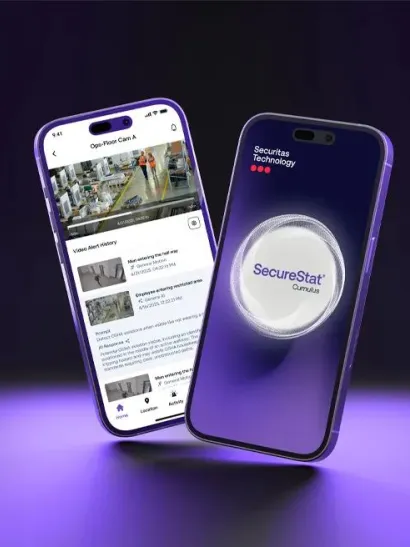
SecureStat ™ Cumulus ™ AI Cloud Video Surveillance
Camera-to-cloud video powered by natural-language GenAI
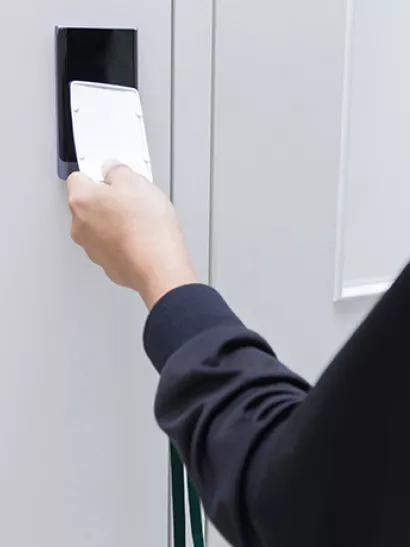
Access Control
Create a safe environment for your employees and visitors.


