
What is Security Management?

Most organisations have security tools in place. The harder part is running security as a reliable operation: clear ownership, repeatable processes, and a response that works at 2 a.m. as well as it does in a meeting room.
Security management is the discipline of planning, operating, and improving security across an organisation. This guide defines what it is, what it covers across people, process, and technology, and what a security management platform does when you have multiple sites and multiple systems.
What Is Security Management?
Security management is the organised approach to protecting people, property, information, and operations through governance, day-to-day controls, and a consistent response to events.
It is broader than “cybersecurity” and broader than “physical security”. In practice, the two meet all the time. A lost access card is a physical issue until it becomes a data issue. A cyber incident can trigger a physical response on site. Security management is what keeps those strands connected so teams are not working in parallel with different priorities and different reporting.
Governance
Governance is how security decisions get made and enforced. It covers ownership, approval paths, standards, and oversight.
Different types of security management
- Physical security management covers deterrence, detection, access control, and onsite response
- Cybersecurity management covers protecting systems and data, including identity, monitoring, and cyber incident handling
- Governance, risk, and compliance management covers policies, auditability, and reporting
- Security operations management covers day-to-day triage, escalation, and coordination

What Does Security Management Include?
Security management works when people, process, and technology line up.
People
You need named owners and a clear escalation path. In many Irish organisations, that means security, facilities, IT, site leadership, and external partners working from the same playbook.
Typical basics include
- Defined roles for monitoring, incident lead, and decision-making
- After-hours escalation that does not rely on “who happens to be available”
- Training for the people who must act during an incident
- Agreed steps for external coordination, including when to involve An Garda Síochána or emergency services
Process
Process is where consistency comes from. Good process removes decision-making under pressure.
Policy
A policy is a decision made once and applied the same way across sites. Playbooks turn that policy into steps people can follow during an incident.
Common process components include
Policies and standards for access, monitoring, evidence handling, and reporting
Incident playbooks with escalation thresholds and response steps
Regular reviews, audits, and post-incident learning
Continous improvement based on trends and recurring issues
Technology
Technology supports detection, control, and visibility. A typical mix includes:
- Detection and event sources (alarms, sensors, analytics, cyber signals)
- Control systems (access control, identity, permissions)
- Monitoring and visibility (video, consoles, dashboards)
- Evidence and reporting (logs, incident records, exports)
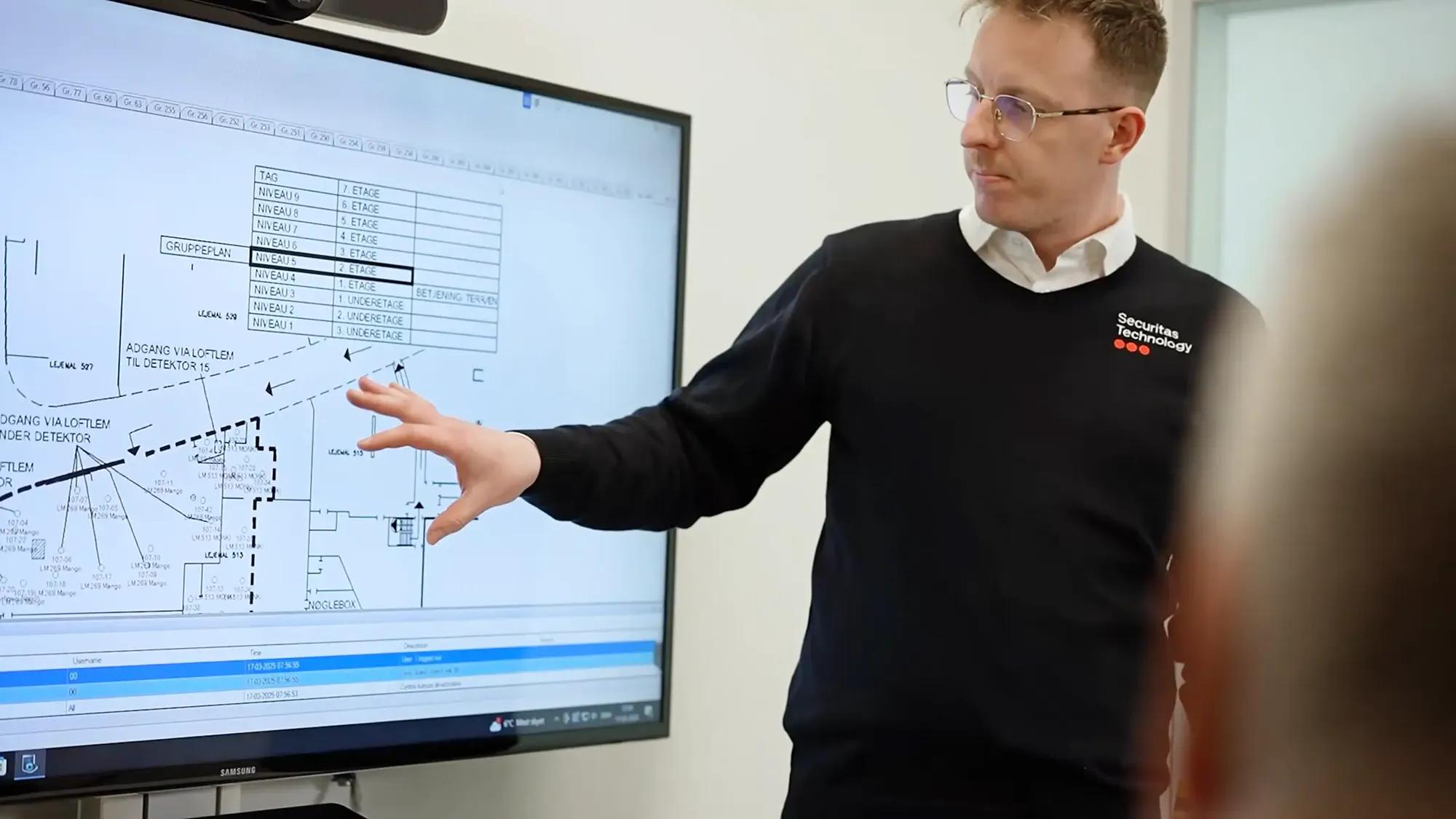
Core Functions of Security Management
Risk assessment
Risk assessment is how you decide what matters most. It combines threat likelihood, impact, and the practicality of controls so effort goes to the right risks.
- Risk assessment and prioritisation
- Policy development and enforcement
- Monitoring and detection
- Incident response and recovery
- Compliance reporting and audit readiness
- Vendor and third-party coordination where relevant
What Is a Security Management Platform?
A security management platform is a centralised layer that unifies workflows, visibility, and control across security systems and sites.
It is not a single camera system or a single alarm panel. It connects what you already have so events land in one operational view, follow consistent workflows, and produce reporting you can trust.
Platforms become important when organisations have multiple sites and multiple vendors. For example, a business with a head office in Dublin and sites across Cork, Galway, and the Midlands can standardise how incidents are handled without forcing every location into a different local setup.
What Does a Security Management Platform Do?
- Centralise monitoring and event management across systems
- Standardise incident workflows and escalation
- Provide role-based access and audit trails
- Enable reporting across sites and systems
- Improve decision-making with dashboards and trend analysis
- Support integration with physical security and relevant IT tooling
Incident management
Incident management is the end-to-end handling of an event: triage, verification, escalation, action taken, documentation, and follow-up.
Key Capabilities Buyers Expect
- Event and alarm management that can handle volume
- Video and access control integration points for verification
- Case management and incident documentation
- Automation and rules-based workflows
- Reporting, compliance exports, and KPIs
- Cyber hygiene basics such as authentication, permissions, logging, and system health monitoring

Use Cases and Practical Examples
Multi-site retail and corporate campuses
A platform helps keep processes consistent. Operators can triage events the same way for every site, and local teams still act on the ground with clear escalation.
Critical infrastructure
Where safety and service continuity matter, verification and coordination are key. Platforms can help enforce escalation rules and keep a clean record of decisions and actions.
Facilities with mixed legacy and modern systems
Many estates have older panels alongside newer cameras and access control. A platform can standardise workflows and reporting without a disruptive “rip and replace”.
Teams with limited staff
Automation can route events, apply prioritisation rules, and reduce admin during an incident, which helps smaller teams stay on top of event volume.
Benefits of Effective Security Management
- Reduced risk through consistent controls
- Faster response and fewer missed events
- Lower operational complexity across sites and vendors
- Stronger compliance posture through repeatable reporting
- Better visibility for leadership through measurable outcomes
Common Challenges and How to Avoid Them
Siloed tools and fragmented visibility
Map where signals come from and where decisions get made. Centralise workflows and reporting first, then expand integrations over time.
Alert fatigue and poor prioritisation
Define what “actionable” means, tune rules, and track false alarm drivers. Prioritisation needs agreed criteria, not operator instinct.
Inconsistent processes across sites
Start with a small set of playbooks that cover common events, then train and enforce them. If you allow exceptions, record and review them.
Weak governance around access, permissions, and reporting
Review permissions regularly, separate duties for high-risk actions, and ensure audit trails and retention are in place.
Overbuying technology without operational ownership
Before adding tools, confirm who owns monitoring, who approves policy changes, who maintains workflows, and who reviews performance.

How Securitas Technology’s Security Management Platform SecureStat™ HQ Helps
If your security operation is spread across sites and systems, the quickest gains often come from standardising how work gets done and how it is reported. SecureStat™ HQ is Securitas Technology’s Security Management Platform designed to centralise event management, apply consistent incident workflows, and deliver visibility across distributed environments.
To see how a platform approach could help you standardise security operations across your sites, explore the SecureStat™ HQ Security Management Platform.
A Scalable Operating Model for Security
Security management is an operating model. When people, process, and technology are aligned, incidents are handled consistently and reporting stands up to scrutiny. A security management platform supports that model at scale, especially across multiple sites and mixed systems.
Explore our Security Management Platform and talk to an expert about standardizing security operations across your sites.
Upgrade your protection with smarter security technology
Fill in the form with your details and our security consultant will contact you shortly.